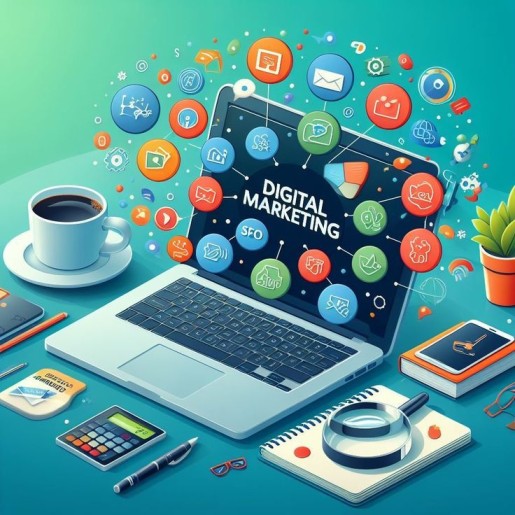
Digital marketing involves promoting products, services, or brands through internet-based platforms and modern technology. Put simply, it represents a contemporary approach to marketing that uses online channels like websites, social media networks, search engines, mobile applications, and email to connect with and engage prospective customers. Since people are spending increasing amounts of time online, companies now favor digital marketing strategies because they enable connection with worldwide audiences, provide insights into customer patterns, and deliver more precise measurement of outcomes compared to conventional marketing approaches.
Digital marketing has emerged as one of the most effective resources for modern businesses. From major corporations to emerging startups, every company utilizes online marketing strategies to draw in customers, boost sales figures, and enhance brand recognition. Its widespread adoption stems primarily from accessibility—any individual with a smartphone and internet access can take part in the digital marketplace, whether as a buyer or content creator.

Why Digital Marketing Matters
Digital marketing holds significance because it provides numerous benefits over conventional marketing approaches such as television commercials, radio spots, print advertisements, or outdoor signage. Initially, digital marketing proves more budget-friendly. Companies can launch advertising campaigns on Instagram or Facebook for significantly less money than large-scale billboards or television spots. Additionally, it enables precise audience targeting. Organizations can select who encounters their material based on demographics, geographic location, preferences, and online habits. This accuracy ensures marketing investments aren’t squandered on individuals unlikely to purchase the offering.
Another significant advantage involves immediate performance monitoring. Through digital marketing platforms, companies can track how many individuals saw their advertisement, interacted with it, or made purchases through it. This capability assists in refining approaches and determining which content types perform most effectively. While traditional marketing produces slow or hard-to-measure outcomes, digital marketing provides instant feedback.
Main Components of Digital Marketing
Digital marketing encompasses a wide range of strategies and channels. Here are the primary elements:
1. Search Engine Optimization (SEO)
SEO involves enhancing a website’s ranking on search platforms like Google. When users search for terms connected to your company, SEO helps your site appear more prominently in results. SEO’s objective is generating natural traffic without purchasing advertisements. This includes refining website material, incorporating appropriate keywords, enhancing page load times, and establishing quality backlinks.
2. Social Media Marketing (SMM)
Social platforms including Instagram, Facebook, YouTube, LinkedIn, and Twitter serve crucial functions in digital marketing. Social media marketing encompasses developing and distributing content, launching advertising campaigns, interacting with audiences, and establishing robust brand visibility. Companies utilize posts, reels, stories, and video content to draw in and engage customers. Influencer collaborations and brand endorsements form additional aspects of social media marketing.
3. Content Marketing
Content serves as digital marketing’s foundation. This encompasses blog articles, written pieces, video content, visual graphics, tutorials, digital books, and email newsletters. Content marketing aims to deliver meaningful information that informs or amuses audiences, establishes credibility, and ultimately guides them toward purchasing decisions. Superior content establishes brands as authorities within their industries.
4. Search Engine Marketing (SEM) and Pay-Per-Click (PPC) Advertising
SEM involves paid promotion on search platforms like Google. Companies compete for particular keywords to display their advertisements prominently in search outcomes. PPC means payment occurs only when users click advertisements. This approach provides rapid visibility and focused traffic, particularly beneficial for newer websites or highly competitive sectors.
5. Email Marketing
Email marketing encompasses delivering customized messages, regular updates, seasonal promotions, and product announcements to subscribers. This represents one of digital marketing’s most economical approaches. Through email campaigns, businesses can develop relationships, share new offerings, and motivate additional purchases.
6. Affiliate Marketing
Through affiliate marketing, individuals or content creators promote brand products or services while earning commissions for each sale generated through their specific links. This approach advantages both parties, as brands gain increased visibility while affiliates generate income through promotional activities.
7. Mobile Marketing
Mobile marketing encompasses SMS campaigns, WhatsApp promotions, mobile application advertisements, and push notifications. Given that most individuals rely on smartphones for browsing, purchasing, and entertainment, mobile marketing serves an essential function in connecting with customers efficiently and personally.
How Digital Marketing Works
Digital marketing operates through a straightforward sequence:
- Developing marketing content such as articles, videos, or promotional material.
- Distributing it online via social platforms, websites, or search engines.
- Connecting with target audiences based on preferences, demographics, and digital behavior.
- Encouraging audience interaction through likes, comments, shares, clicks, or registrations.
- Transforming audiences into buyers through special offers, dedicated pages, and action prompts.
- Evaluating results using analytics tools to determine successful elements and areas requiring enhancement.
This ongoing process enables continuous business growth.
Conclusion
Digital marketing represents a vital component of contemporary business approaches. It operates quickly, remains cost-effective, provides measurable results, and delivers strong outcomes. Using various methods including social media promotion, SEO, content development, email campaigns, and paid advertising, companies can connect with appropriate audiences at optimal moments. As society becomes increasingly digital, developing digital marketing expertise becomes crucial for anyone seeking to establish a brand, expand a business, or build an online presence.
The pointers mentioned are very helpful if you are learning digital marketing, very helpful for beginners 😊👍🏻